
Sunday, 30 September 2018

Wednesday, 5 September 2018
Saturday, 14 July 2018
St. Wojciech church in Warsaw (Wola) - transitory camp
Discover the story of a transitory camp located at the St. Wojciech Church in Warsaw during the Warsaw Rising in summer 1944. Up to 90,000 inhabitants of Warsaw were detained there and later transported to Dulag 121 in Pruszków to be later deported to force labour camps or other parts of occupied Poland.
Tuesday, 5 June 2018
Wednesday, 16 May 2018
Wednesday, 25 April 2018
Bronisław Pekosiński case. Story of a victim.
Repulsive, he was. As kids, we would point fingers at him, laughing, wondering why he walks like a spider. Funny it seemed. But was no fun at all when I learned why he looked so awkward.
I still remember the day when my mum took my tiny hands and explained that the man we had been making fun of, had not deserved to be treated that way...
It was during WWII when he was born, Germans took his family to a transitory camp in Zwierzyniec. His mum threw him over the barbed wire fence in a desperate hope for his salvation by those who were not imprisoned and might have encountered her baby son. He fell on the heap of potatos and endured a serious damage in his hip. That is why for the rest of his life he would walk with difficulty throwing his legs forward like a spider. Fun no more...

His name was Bronisław Pekosiński. This was not his real name. No one knows the real one. He was never reunited with his family. No one knows either whether they had survived anyway. He was named Bronisław as WWII started on 1 September and it is always Bronisław name day this very day. Pekosiński came from an acronym PKOS (Polski Komitet Opieki Społecznej) Eng. Polish Social Help Comittee as this was the organisation that took care for him.
Discover his traumatic story in the award winning film: "Przypadek Pekosińskiego" (1993).
Truly recommended!
Bronisław Pekosiński died on 2 January 2013. He is buried in Zamość where he lived all through his life and should never been forgotten. Further reading on the fate of Polish kids during the Pacification of the Zamość Region (Aktion Zamość) is recommended here. A new post describing the infamous camp in Zwierzyniec will be published soon.
Read more:


I still remember the day when my mum took my tiny hands and explained that the man we had been making fun of, had not deserved to be treated that way...
It was during WWII when he was born, Germans took his family to a transitory camp in Zwierzyniec. His mum threw him over the barbed wire fence in a desperate hope for his salvation by those who were not imprisoned and might have encountered her baby son. He fell on the heap of potatos and endured a serious damage in his hip. That is why for the rest of his life he would walk with difficulty throwing his legs forward like a spider. Fun no more...

His name was Bronisław Pekosiński. This was not his real name. No one knows the real one. He was never reunited with his family. No one knows either whether they had survived anyway. He was named Bronisław as WWII started on 1 September and it is always Bronisław name day this very day. Pekosiński came from an acronym PKOS (Polski Komitet Opieki Społecznej) Eng. Polish Social Help Comittee as this was the organisation that took care for him.
Discover his traumatic story in the award winning film: "Przypadek Pekosińskiego" (1993).
Truly recommended!
Source: Youtube
Bronisław Pekosiński died on 2 January 2013. He is buried in Zamość where he lived all through his life and should never been forgotten. Further reading on the fate of Polish kids during the Pacification of the Zamość Region (Aktion Zamość) is recommended here. A new post describing the infamous camp in Zwierzyniec will be published soon.
Read more:
- Agnieszka Jaczyńska: "Sonderlaboratorium SS : Zamojszczyzna "Pierwszy obszar osiedleńczy w Generalnym Gubernatorstwie" (The SS Sonderlaboratorium: the Zamość Region : "The first settlement area in the Generalgouvernement", IPN 2012
- http://www.zamosconline.pl/text.php?id=8472&rodz=wiad accessed on 25 April 2018


Aktion Zamość
Images source: Internet
Saturday, 21 April 2018
The siege of Warsaw, 1939
Germans besieged the capital of Poland between 8 and 28 September 1939 in their attempt to take over the whole of the country with Blitzkrieg starting on 1 September 1939.
10,000 inhabitants of Warsaw were killed due to bombardments and further 50,000 wounded.
Warsaw was being defended by 124,000 Polish soldiers. Germans used 175,000 soldiers to encirle the city loosing 1,500 of them and having 5,000 wounded. Poles lost 2,000 soldiers with 15,000 wounded.
On 17 September Hitler order the Royal Castle of Warsaw to be bombarded. The date marks the beging of the apocalypse for Poles as on the very same day Soviets invaded Poland all along the eastern border. Having armed forced counting 1,000,000 soldiers, Poland had to fight on two fronts against 1,800,000 Germans and 600,000 Soviets.

On 25 September, Germans conducted the largest air raid with 560 tons of high explosive bombs and 72 tons of incendiary bombs being dropped. It is estimated that 1,150 sorties were flown by German aircrafts.
Luftwaffe killed 10,000 people and destroyed 10% of the city's architectural substance. The Warsaw power plant and waterworks got heavily damaged, not to mention the pearls of Polish architecture: palaces, churches and many more.
Quite interestingly Hitler did not allow to destroy the old town of Warsaw. Some historians say that he envisaged that in the future Germans would prove that Warsaw had had teutonic roots as the complex of the Old Town was erected according to Magdeburg rights with a huge square in the centre and streets surounding it.
The capitulation was signed on 28 September 1939. Dark years for Warsaw commenced with the final act of the Warsaw Rising being played in summer 1944 when Germans led to the anihilation of the city killing 200,000 civilians and 18,000 of the insurgents, forcing the remaining 650,000 to leave their homes and been expelled from their city straight to concentration camps, forced labour or becoming displaced till the end of WWII.
An american reporter Julien Bryan was the ONLY FOREIGN correspondent who remained with the people of Warsaw during the siege in September 1939. He documented the tragedy of those days.
Let us analyse some of his pictures.


The picture below is one of the most petryfing as it illustrates Balbina Szymańska with her newborn twin boys.
 It was taken in the St. Sophie Hospital where 50 mothers remained in the basement which sheltered them due to constant Luftwaffe bombardment danger. Seeing all these pain-ridden faces of young mothers...lying on the cold floor with no hope in their hearts...carryng their treasures - sweet newborns not aware of the drama all around...

The next picture shows young Ryszard Pajewski. Only 9 at that time he had suddenly been made the family breadwinner. Just one picture out of 1,300,000 dramas of 1,300,000 inhabitants of Warsaw at that time.

Other Bryan's well known pictures are also worth paying attention to:


10,000 inhabitants of Warsaw were killed due to bombardments and further 50,000 wounded.
Warsaw was being defended by 124,000 Polish soldiers. Germans used 175,000 soldiers to encirle the city loosing 1,500 of them and having 5,000 wounded. Poles lost 2,000 soldiers with 15,000 wounded.
On 17 September Hitler order the Royal Castle of Warsaw to be bombarded. The date marks the beging of the apocalypse for Poles as on the very same day Soviets invaded Poland all along the eastern border. Having armed forced counting 1,000,000 soldiers, Poland had to fight on two fronts against 1,800,000 Germans and 600,000 Soviets.

The Royal Castle of Warsaw, 17 September 1939
Picture source: Internet
On 25 September, Germans conducted the largest air raid with 560 tons of high explosive bombs and 72 tons of incendiary bombs being dropped. It is estimated that 1,150 sorties were flown by German aircrafts.
Luftwaffe killed 10,000 people and destroyed 10% of the city's architectural substance. The Warsaw power plant and waterworks got heavily damaged, not to mention the pearls of Polish architecture: palaces, churches and many more.
Quite interestingly Hitler did not allow to destroy the old town of Warsaw. Some historians say that he envisaged that in the future Germans would prove that Warsaw had had teutonic roots as the complex of the Old Town was erected according to Magdeburg rights with a huge square in the centre and streets surounding it.
The capitulation was signed on 28 September 1939. Dark years for Warsaw commenced with the final act of the Warsaw Rising being played in summer 1944 when Germans led to the anihilation of the city killing 200,000 civilians and 18,000 of the insurgents, forcing the remaining 650,000 to leave their homes and been expelled from their city straight to concentration camps, forced labour or becoming displaced till the end of WWII.
An american reporter Julien Bryan was the ONLY FOREIGN correspondent who remained with the people of Warsaw during the siege in September 1939. He documented the tragedy of those days.
Let us analyse some of his pictures.

On the picture, we may see Kazimiera Mika mourning after her sister who was killed during Luftwaffe air raid. More pictures depicting the scene might be accessed here.

The picture below is one of the most petryfing as it illustrates Balbina Szymańska with her newborn twin boys.
 It was taken in the St. Sophie Hospital where 50 mothers remained in the basement which sheltered them due to constant Luftwaffe bombardment danger. Seeing all these pain-ridden faces of young mothers...lying on the cold floor with no hope in their hearts...carryng their treasures - sweet newborns not aware of the drama all around...
The epilogue of the story is even more petryfying as 5 years later during the Warsaw Rising, Balbina Szymańska left her boys with her husband and went out to look for some food. When she got back, theire was no home. No kids. As one of the German bombs destroyed their appartment house. The boys were killed on their 5th birthday, 5 September 1944.
The next picture shows young Ryszard Pajewski. Only 9 at that time he had suddenly been made the family breadwinner. Just one picture out of 1,300,000 dramas of 1,300,000 inhabitants of Warsaw at that time.
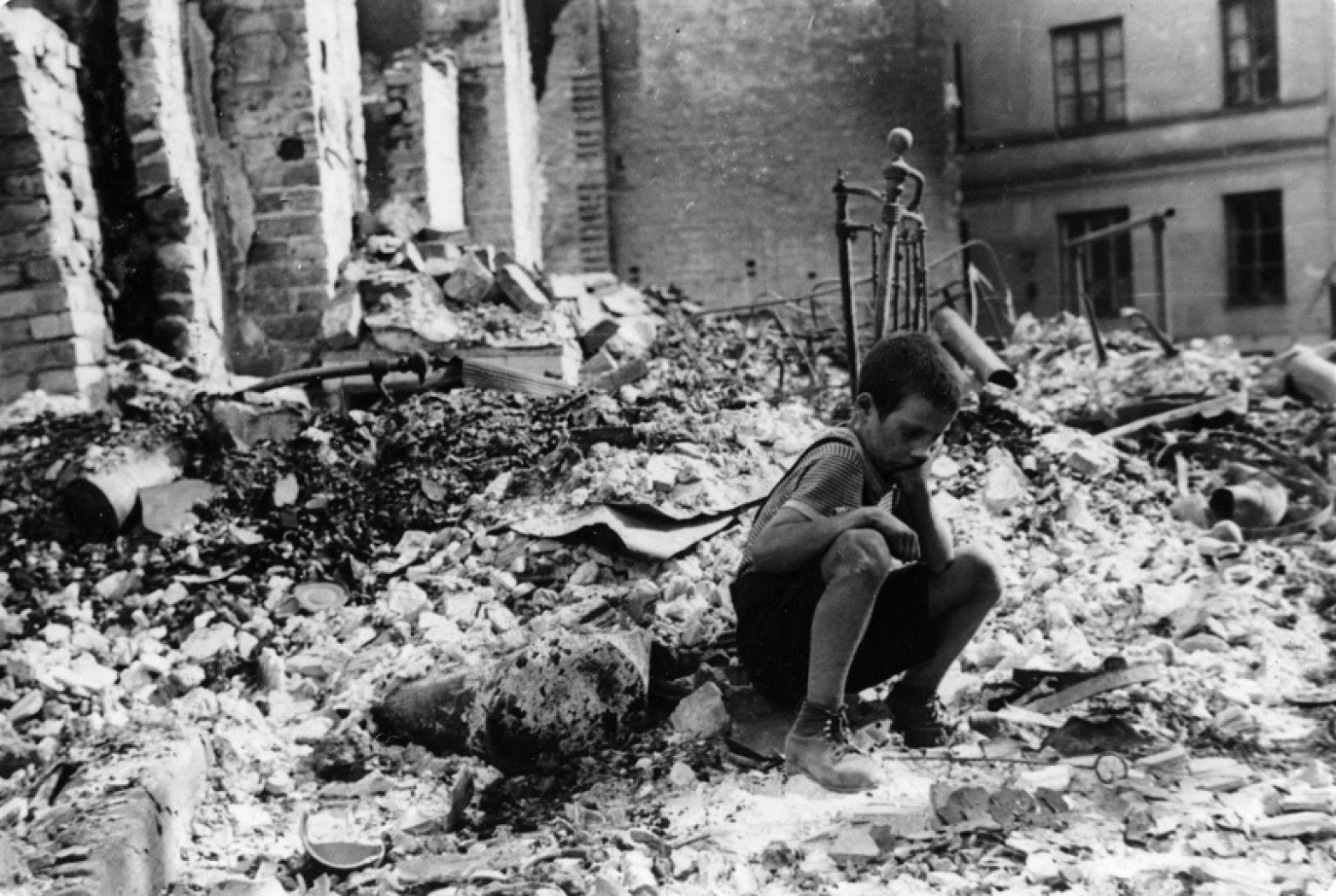
Other Bryan's well known pictures are also worth paying attention to:


Author: Julien Bryan
Images source: Internet
For a detailed report of the besieged city, watch Julien Bryan's documentary:
Source: Youtube
In total, Warsaw was torn down to foundations in 84% by Germans during WWII. 60% of its inhabitants perished. Let us look the way the capital of Poland looked like before the turmoils of the war started...
Source: Youtube
Read more:
- https://poloniuszblog.wordpress.com/2016/04/17/poland-in-1939-and-in-1959-how-i-found-the-people-id-photographed-after-20-years/ accessed on 21 April 2018
- www.warsawrising.eu (For the full acount of WWII in Warsaw with detailed look at the Warsaw Rising of 1944)
- https://ipn.gov.pl/pl/publikacje/ksiazki/27493,Kolory-wojny-Oblezenie-Warszawy-w-barwnej-fotografii-Juliena-Bryana-The-Colors-o.html

Subscribe to:
Posts (Atom)