
Showing posts with label 1944. Show all posts
Showing posts with label 1944. Show all posts
Thursday, 16 January 2020

Thursday, 28 February 2019
Sunday, 3 February 2019
Saturday, 12 January 2019
Sunday, 25 November 2018
Wednesday, 3 October 2018
Saturday, 14 July 2018
St. Wojciech church in Warsaw (Wola) - transitory camp
Discover the story of a transitory camp located at the St. Wojciech Church in Warsaw during the Warsaw Rising in summer 1944. Up to 90,000 inhabitants of Warsaw were detained there and later transported to Dulag 121 in Pruszków to be later deported to force labour camps or other parts of occupied Poland.
Tuesday, 5 June 2018
Wednesday, 16 May 2018
Saturday, 21 April 2018
The siege of Warsaw, 1939
Germans besieged the capital of Poland between 8 and 28 September 1939 in their attempt to take over the whole of the country with Blitzkrieg starting on 1 September 1939.
10,000 inhabitants of Warsaw were killed due to bombardments and further 50,000 wounded.
Warsaw was being defended by 124,000 Polish soldiers. Germans used 175,000 soldiers to encirle the city loosing 1,500 of them and having 5,000 wounded. Poles lost 2,000 soldiers with 15,000 wounded.
On 17 September Hitler order the Royal Castle of Warsaw to be bombarded. The date marks the beging of the apocalypse for Poles as on the very same day Soviets invaded Poland all along the eastern border. Having armed forced counting 1,000,000 soldiers, Poland had to fight on two fronts against 1,800,000 Germans and 600,000 Soviets.

On 25 September, Germans conducted the largest air raid with 560 tons of high explosive bombs and 72 tons of incendiary bombs being dropped. It is estimated that 1,150 sorties were flown by German aircrafts.
Luftwaffe killed 10,000 people and destroyed 10% of the city's architectural substance. The Warsaw power plant and waterworks got heavily damaged, not to mention the pearls of Polish architecture: palaces, churches and many more.
Quite interestingly Hitler did not allow to destroy the old town of Warsaw. Some historians say that he envisaged that in the future Germans would prove that Warsaw had had teutonic roots as the complex of the Old Town was erected according to Magdeburg rights with a huge square in the centre and streets surounding it.
The capitulation was signed on 28 September 1939. Dark years for Warsaw commenced with the final act of the Warsaw Rising being played in summer 1944 when Germans led to the anihilation of the city killing 200,000 civilians and 18,000 of the insurgents, forcing the remaining 650,000 to leave their homes and been expelled from their city straight to concentration camps, forced labour or becoming displaced till the end of WWII.
An american reporter Julien Bryan was the ONLY FOREIGN correspondent who remained with the people of Warsaw during the siege in September 1939. He documented the tragedy of those days.
Let us analyse some of his pictures.


The picture below is one of the most petryfing as it illustrates Balbina Szymańska with her newborn twin boys.
 It was taken in the St. Sophie Hospital where 50 mothers remained in the basement which sheltered them due to constant Luftwaffe bombardment danger. Seeing all these pain-ridden faces of young mothers...lying on the cold floor with no hope in their hearts...carryng their treasures - sweet newborns not aware of the drama all around...

The next picture shows young Ryszard Pajewski. Only 9 at that time he had suddenly been made the family breadwinner. Just one picture out of 1,300,000 dramas of 1,300,000 inhabitants of Warsaw at that time.

Other Bryan's well known pictures are also worth paying attention to:


10,000 inhabitants of Warsaw were killed due to bombardments and further 50,000 wounded.
Warsaw was being defended by 124,000 Polish soldiers. Germans used 175,000 soldiers to encirle the city loosing 1,500 of them and having 5,000 wounded. Poles lost 2,000 soldiers with 15,000 wounded.
On 17 September Hitler order the Royal Castle of Warsaw to be bombarded. The date marks the beging of the apocalypse for Poles as on the very same day Soviets invaded Poland all along the eastern border. Having armed forced counting 1,000,000 soldiers, Poland had to fight on two fronts against 1,800,000 Germans and 600,000 Soviets.

The Royal Castle of Warsaw, 17 September 1939
Picture source: Internet
On 25 September, Germans conducted the largest air raid with 560 tons of high explosive bombs and 72 tons of incendiary bombs being dropped. It is estimated that 1,150 sorties were flown by German aircrafts.
Luftwaffe killed 10,000 people and destroyed 10% of the city's architectural substance. The Warsaw power plant and waterworks got heavily damaged, not to mention the pearls of Polish architecture: palaces, churches and many more.
Quite interestingly Hitler did not allow to destroy the old town of Warsaw. Some historians say that he envisaged that in the future Germans would prove that Warsaw had had teutonic roots as the complex of the Old Town was erected according to Magdeburg rights with a huge square in the centre and streets surounding it.
The capitulation was signed on 28 September 1939. Dark years for Warsaw commenced with the final act of the Warsaw Rising being played in summer 1944 when Germans led to the anihilation of the city killing 200,000 civilians and 18,000 of the insurgents, forcing the remaining 650,000 to leave their homes and been expelled from their city straight to concentration camps, forced labour or becoming displaced till the end of WWII.
An american reporter Julien Bryan was the ONLY FOREIGN correspondent who remained with the people of Warsaw during the siege in September 1939. He documented the tragedy of those days.
Let us analyse some of his pictures.

On the picture, we may see Kazimiera Mika mourning after her sister who was killed during Luftwaffe air raid. More pictures depicting the scene might be accessed here.

The picture below is one of the most petryfing as it illustrates Balbina Szymańska with her newborn twin boys.
 It was taken in the St. Sophie Hospital where 50 mothers remained in the basement which sheltered them due to constant Luftwaffe bombardment danger. Seeing all these pain-ridden faces of young mothers...lying on the cold floor with no hope in their hearts...carryng their treasures - sweet newborns not aware of the drama all around...
The epilogue of the story is even more petryfying as 5 years later during the Warsaw Rising, Balbina Szymańska left her boys with her husband and went out to look for some food. When she got back, theire was no home. No kids. As one of the German bombs destroyed their appartment house. The boys were killed on their 5th birthday, 5 September 1944.
The next picture shows young Ryszard Pajewski. Only 9 at that time he had suddenly been made the family breadwinner. Just one picture out of 1,300,000 dramas of 1,300,000 inhabitants of Warsaw at that time.
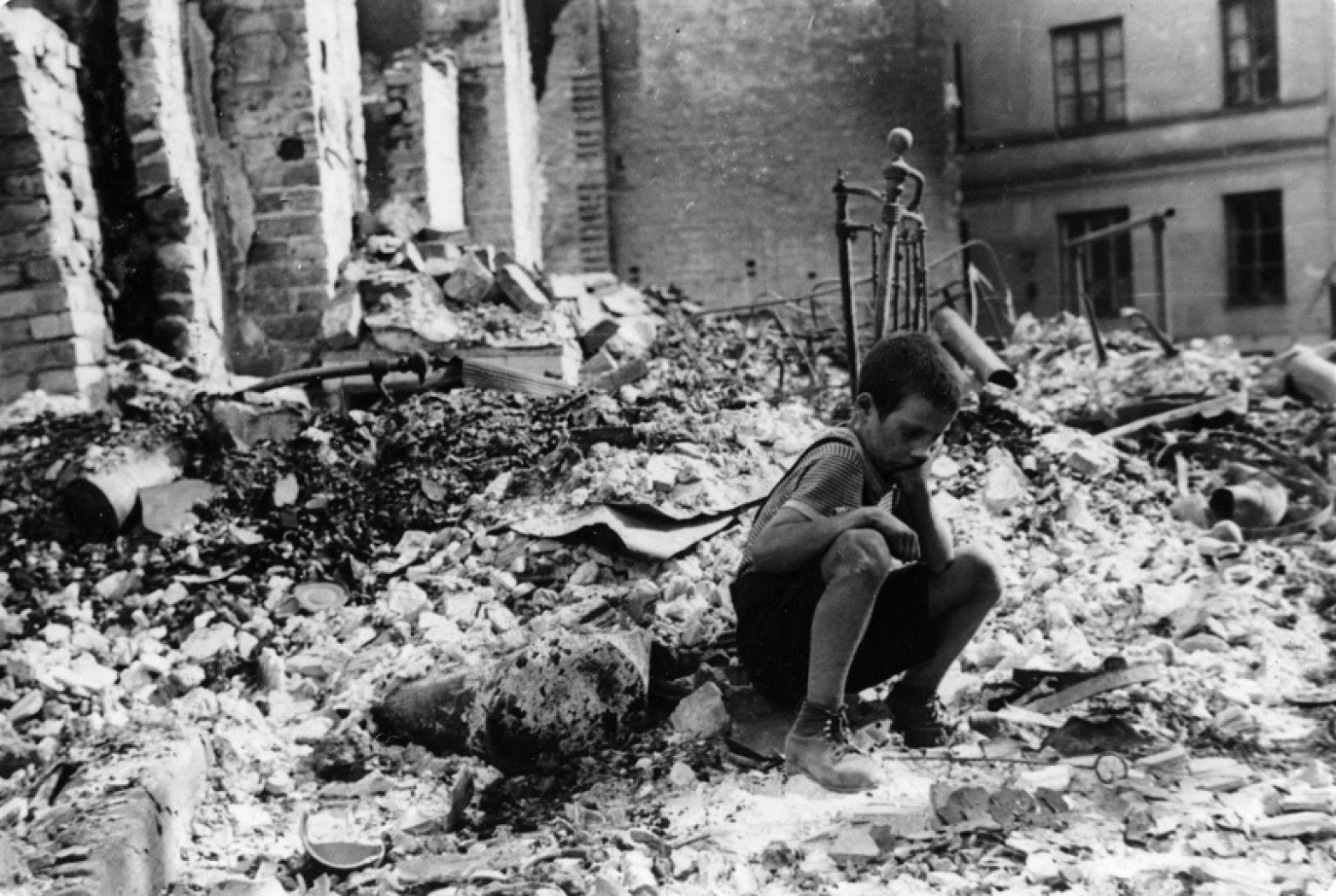
Other Bryan's well known pictures are also worth paying attention to:


Author: Julien Bryan
Images source: Internet
For a detailed report of the besieged city, watch Julien Bryan's documentary:
Source: Youtube
In total, Warsaw was torn down to foundations in 84% by Germans during WWII. 60% of its inhabitants perished. Let us look the way the capital of Poland looked like before the turmoils of the war started...
Source: Youtube
Read more:
- https://poloniuszblog.wordpress.com/2016/04/17/poland-in-1939-and-in-1959-how-i-found-the-people-id-photographed-after-20-years/ accessed on 21 April 2018
- www.warsawrising.eu (For the full acount of WWII in Warsaw with detailed look at the Warsaw Rising of 1944)
- https://ipn.gov.pl/pl/publikacje/ksiazki/27493,Kolory-wojny-Oblezenie-Warszawy-w-barwnej-fotografii-Juliena-Bryana-The-Colors-o.html

Sunday, 15 April 2018
Gestapo Prison in the Lublin's Castle
The medieval castle of Lublin hides too many dreadful stories to be told just in a few paragraphs. However, do you know that it served as one of the heaviest prisons not only during German occupation of Poland but also right away after its end under the communist rule?
Let us analyse the statistics (Germans loved numbers during WWII, didn't they?):
In between 1939-1944:
40,000 prisoners
18,600 deported to concentration camps
3,600 killed in the camps
4,500 executed on the spot
2,200 killed in the course of interrogation process/in prison
10,000 released/escaped or sent free
4,700 no data available
Just to compare let us look at the statistics going back to the period when the Lublin's Castle was under Soviet governance. Soviets did not like to be worse...
In between 1944 - 1954:
33,000 prisoners
440 transports to other prisons
10,196 deported to other prisons in Poland
7,000 deported to Siberia (e.g. Borovitche and Svierdlovsk NKVD labour camps)
515 death sentences released (333 executed).
The Lublin Cactle prison had 73 cells which normally would welcome up to 12 prisoners. During the war more that 60 would be detained in each. Also the prisoners would be kept in a 19th century donjon which had walls 3 meter wide and the detention there was a 'real medieval experience'.
One of the cruellest 'episodes' in the history of the Castle came at the final days of the existence of the Gestapo prison there. On 19 July 800 prisoners were taken to KL Majdanek and executed there. Then on 22 July German SS units executed further 300 prisoners. They would have killed 1000 other prisoners too but an order to leave the city came and they were in desperate rush to leave the city as the Soviets were almost there.


There are many photographs which depict the tragedy of the period however let us spend a few moments pondering on the depth behind the one below showing a relative of the victims after the German execution of 22 July 1944.

Original footage showing the scenes of German barbarity upon the "glorious entrance" of the Soviets to Lublin may be viewed here:
Read more:
Let us analyse the statistics (Germans loved numbers during WWII, didn't they?):
In between 1939-1944:
40,000 prisoners
18,600 deported to concentration camps
3,600 killed in the camps
4,500 executed on the spot
2,200 killed in the course of interrogation process/in prison
10,000 released/escaped or sent free
4,700 no data available
Just to compare let us look at the statistics going back to the period when the Lublin's Castle was under Soviet governance. Soviets did not like to be worse...
In between 1944 - 1954:
33,000 prisoners
440 transports to other prisons
10,196 deported to other prisons in Poland
7,000 deported to Siberia (e.g. Borovitche and Svierdlovsk NKVD labour camps)
515 death sentences released (333 executed).
The Lublin Cactle prison had 73 cells which normally would welcome up to 12 prisoners. During the war more that 60 would be detained in each. Also the prisoners would be kept in a 19th century donjon which had walls 3 meter wide and the detention there was a 'real medieval experience'.
One of the cruellest 'episodes' in the history of the Castle came at the final days of the existence of the Gestapo prison there. On 19 July 800 prisoners were taken to KL Majdanek and executed there. Then on 22 July German SS units executed further 300 prisoners. They would have killed 1000 other prisoners too but an order to leave the city came and they were in desperate rush to leave the city as the Soviets were almost there.


There are many photographs which depict the tragedy of the period however let us spend a few moments pondering on the depth behind the one below showing a relative of the victims after the German execution of 22 July 1944.

Author: Stefan Kiełsznia, 1944
Images source: Internet
Original footage showing the scenes of German barbarity upon the "glorious entrance" of the Soviets to Lublin may be viewed here:
Clip source: Youtube
Read more:
- http://teatrnn.pl/about-us/tourism/
- http://www.projectinposterum.org/docs/chodakiewicz1.htm accessed on 15 April 2018
Saturday, 14 April 2018
Former Gestapo Headquarters, Warsaw
Just within an eye range, two places on the map of Warsaw overlook each other. Still nowadays the two cause thrill on the back. Why? Millions of Poles suffered indirectly because of the men who resided in those buildings and more than dozens of thousands were imprisoned, interrogated, tortured and murdered there.
Former Gestapo Headquarters now housing in its ORIGINAL interiors the Museum of Struggle and Martyrdom at Szucha Avenue, 25, Warsaw is definitely a place one needs to visit. Looking at the "tramlines' where the detained waited for their interrogation, discerning names carved into the walls...still visible as witnesses of the horrifying German occupation of Poland during WWII.


The other building, at Ujazdowskie Avenue, 11 now housing the Ministry of Justice, hides in the basement a terrible testimony of the ruling period of communists in afterwar Poland. Since 1945 there used to be the Ministry of Public Security and the basement served as jail. Unfortunately, the detained were not criminals but soldiers who fought for Poland's independence when Poland was attacked in 1939 by Germans and Soviets, who continued their fight all through the WWII as welll as Warsaw insurgents and all those who did not accept that Soviet Union took over Poland in 1944.
The Museum "Cele Bezpieki" (Eng. Stalinist Jail) opened in March 2018 houses exhibition in ORIGINAL cells and interiors of the former jail which operated here after 1945 during Communist Rule in Poland after WWII. Peep into the cells, grab a torch and discern names, pictures, letters, inscriptions carved into the walls. So much suffering in one place...
Please watch a short clip which introduces us to the exposition:
https://www.facebook.com/celebezpieki/videos/468286023569505/


 Images source: Internet
For a short video showing the exposition go here:
Read more:
Former Gestapo Headquarters now housing in its ORIGINAL interiors the Museum of Struggle and Martyrdom at Szucha Avenue, 25, Warsaw is definitely a place one needs to visit. Looking at the "tramlines' where the detained waited for their interrogation, discerning names carved into the walls...still visible as witnesses of the horrifying German occupation of Poland during WWII.


The other building, at Ujazdowskie Avenue, 11 now housing the Ministry of Justice, hides in the basement a terrible testimony of the ruling period of communists in afterwar Poland. Since 1945 there used to be the Ministry of Public Security and the basement served as jail. Unfortunately, the detained were not criminals but soldiers who fought for Poland's independence when Poland was attacked in 1939 by Germans and Soviets, who continued their fight all through the WWII as welll as Warsaw insurgents and all those who did not accept that Soviet Union took over Poland in 1944.
The Museum "Cele Bezpieki" (Eng. Stalinist Jail) opened in March 2018 houses exhibition in ORIGINAL cells and interiors of the former jail which operated here after 1945 during Communist Rule in Poland after WWII. Peep into the cells, grab a torch and discern names, pictures, letters, inscriptions carved into the walls. So much suffering in one place...
Please watch a short clip which introduces us to the exposition:
https://www.facebook.com/celebezpieki/videos/468286023569505/


For a short video showing the exposition go here:
Read more:
- http://www.projectinposterum.org/docs/chodakiewicz1.htm TRULY RECOMMENDED!
- https://www.facebook.com/celebezpieki/
- http://www.muzeum-niepodleglosci.pl/mauzoleum_szucha/
Thursday, 15 March 2018
Bloody Christmas Eve in Ochotnica Dolna
 |
| Ochotnica Dolna |
Bloody Christmas Eve in Ochotnica Dolna – the symbolic name given to the pacification of the village Ochotnica Dolna (Nowy Targ County), conducted by the German occupiers in the last months of World War II. On the 23rd December 1944 an SS unit murdered 56 residents of Ochotnica, and partially burned the village. The name of the Bloody Christmas Eve refers to the Eve of Christmas, which in 1944 was celebrated on Saturday, December 23rd. On December 22nd, 1944 Germans came to Ochotnica Dolna to rob the village as part of the so-called provisioning action. Despite the protest of the local people a group of Soviet partisans attacked the German soldiers, killing two of them, including the non-com officer, SS-Unterscharführer Bruno Koch.
Next day about 200 SS-men came in six cars from Krościenko. The Germans intruded into the homes, demanding money first, and then murdering people. Kids were thrown alive into the fire or brutally murdered. The crime in Ochotnica Dolna, on December 23rd was committed by criminal company SS. This unit consisted of troops of different nationalities. The majority were storm troopers from 3. SS Division Totenkopf and 4. SS Panzergrenadier Division Polizei, volksdeutsche from Poland, Russia and Ukraine. On 23rd December 1944, 56 people were killed, including 19 children and 21 women. During over two hours almost all the members of Chlipała, Rusnak, Brzeźny, Karczewski families were killed. The fire-station, the folk house and 32 farms were burned.
The pacification of Ochotnica was one of the bloodiest German repressive actions in the Podhale region.
The monument in Ochotnica Dolna presents twenty years old Maria Kawalec, who cradles a little child to her breast. After her husband was shot, Maria jumped out of the window with her son in her hands. The first bullet shot the child in the forehead , another went through the shoulder blade and the jaw of the mother, who squatted under a willow, and she did not release the child from her hands, and froze in this position.
The pacification of Ochotnica was one of the bloodiest German repressive actions in the Podhale region.
The monument in Ochotnica Dolna presents twenty years old Maria Kawalec, who cradles a little child to her breast. After her husband was shot, Maria jumped out of the window with her son in her hands. The first bullet shot the child in the forehead , another went through the shoulder blade and the jaw of the mother, who squatted under a willow, and she did not release the child from her hands, and froze in this position.
Sunday, 11 March 2018
Dirlewanger’s ‘bloody adventures’ in Belarus in 1944
Oskar Dirlewanger, commander of the 36th Waffen Grenadier Division of the SS, is responsible for being the head of one of the cruelest SS divisions during WWII which was composed of former prisoners, renegades and poachers. It wreak havoc anywhere it appeared and was acclaimed as the most heinous unit within German troops.
It is estimated that its "soldiers" killed more than 60,000 persons. Its crowning achievement was the Wola Massacre during Warsaw Rising in August 1944 when Dirlewanger’s troops executed more than 30,000 civilians (in total 50,000 were executed during the Wola Massacre in between 5-7 August 1944).
Belarus operations were a sad prelude to what happened in Warsaw in summer 1944. 345,000 people are said to be eliminated by Dirlewanger’s actions within the scope of operations named: „Adler”, „Erntefest”, „Zauberflöte”, „Cottbus”.
At the Palik lake, 16,662 Dirlewanger’s soldiers were sent to encircle scared villagers of nearby village to the lake side. 15,000 civilians are reported to have been killed. Dirlewanger’s idea to push people towards mine field proved to be very ‘effective’ and his commanders were delighted that he came up with such great „innovations”.
Dirlewanger is said to be involved in human trafficking and he was specialised in raping women and abusing children. One of the radio messages sent by Dirlewanger said: „Sturmbahnfuerher wants Russian girls. Otto will have a chase on Monday and will bring them down (…). The price the same as Obersturmbannfuerher set up earlier in the forests around the Palik Lake. One Russian girl for two vodka bottles”.(1)

Read more:
- · Ingrao, Chrisian. The SS Dirlewanger Brigade. The History of the Black Hunters, Skyhorse, New York 2011
- Richie, Alexandra, Warsaw 1944, published in 2015
- · https://www.historyanswers.co.uk/history-of-war/oskar-dirlewanger-the-ss-butcher-of-warsaw/ accessed on 11 March 2018
Saturday, 10 March 2018
Wola District Massacre during Warsaw Rising 1944
Between 5 and 7
August 1944, within THREE DAYS,
German units executed 50,000 civilians of the Wola district during Warsaw
Rising which erupted in Warsaw, capital of Poland, occupied by Germans since October
1939.
Key names to remember as for mass slaughtering, mass rapes,
mass looting as well as mass executions are: Oskar Dirlewanger, Heinrich Heinz Reinefarth, Alfred Spilker and Bronisław Kamiński.
When the Warsaw Rising started, Himmler on behalf of Adolf
Hitler ordered that:
- Captured insurgents are to be executed no matter whether they follow the stipulations of the Hague Conventions or not.
- Civilians, who are not taking part in the battle, women, children, are to be executed anyway.
- The whole city of Warsaw is to be levelled to the ground, i.e. houses, streets, offices – anything which constitutes the city.

German troops (mainly composed of SS, renegades, criminals
and former Soviet citizens) were asked to make a passage from the western part
of the city towards the Vistula River in order to allow German transports reach the Eastern Front. When the Rising burst out, Hitler got furious as Warsaw was a
very important transportation hub and not a single transport could have reached
the other side of the Vistula River.
The number of executed was so huge that the piles of corpses
reached the 2nd floor and it turned out that German units do not have enough
ammunition to kill all the detainees…

Heinz Reinefarth reported to General von Vormann: „I have too
many prisoners of war and not enough amunition”. His commanders had no doubts
as for the dilemma. Why? Let us think just of one of the ‘events’ from those
horrifying days.
One of the most notorious examples is when one of the
Dirlewanger units entered an orphanage where about 300 orphans were placed. One
of the soldiers, Matthias Schenk said that he heard Dirlewanger shout: „Don’t waste ammunition, kill all of them with
the butts!”. Schenk still can’t erase from his memory the sight of high steps
with blood flushing down (…)”.
Another terrifying story is what happened to Wanda Lurie. She was a mother of 3, the
oldest was 11 years old. She was expelled from her home with kids who got
executed in front of her eyes. The bullet that was destined to kill her, went
through her neck and she was neither killed nor she lost consciousness. She
fell on the heap of corpses and she remained in such a position for 2 days. On
the third day she decided to organise an escape. Why? She felt movements of her
baby as she was 9 months pregnant. She managed to escape and gave birth to her
baby son on 20 August. The only child who survived the war. Mr Mścisław Lurie
resides now in Warsaw and tries to do his best to keep in memory all what
happened to his family and his beloved city shattered with all those turmoils
of war.

Image: Wanda Lurie with her son
In total 50,000 persons are reported to have been killed
within 3 days. The slaughtering continued till 11 August 1944.
At some point Erich von dem Bach, SS Obergruppenfuerher, the
Commander of all German troops during Warsaw Rising, realised it is more
effective to send the detained to labour camps rather than execute them on the
spot not having any profits of them at all.
Warsaw Rising Museum identified
57,189 names of the Varsovians and Poles who lost their lives just because
they found themselves in Warsaw in summer 1944. (1)
Heinz Reinefarth was a respected citizen in post–war Germany
holding a position of a mayor of a
seaside resort of Westerland in Schleswig-Holstein. He was a lawyer and it was ‘impossible’
to bring him to justice due to the lack of evidence (sic!).

Image: H. Reinefarth
Oskar Dirlewanger was hanged in French controlled area of
Germany in 1945 because most supposedly someone recognised him and decided to finally
put his existence to an end.

Image: O. Dirlewanger
Read more:
- · Richie, A., Warsaw 1944, published in 2013
- · Davies, N., Rising ’44. The Battle for Warsaw. 2004
- · https://www.historyanswers.co.uk/history-of-war/oskar-dirlewanger-the-ss-butcher-of-warsaw/ accessed on 10 March 2018
- · https://ahtribune.com/history/1124-wola-massacre.html accessed on 10 March 2018
- Gurstyn, P. Rzeź Woli, 2014
Source: Youtube.com,
a clip from "Miasto 44" motion picture (Eng. "City 44").
Source: Youtube.com,
Mathias Schenk story.
I
Subscribe to:
Posts (Atom)