
Showing posts with label Jews. Show all posts
Showing posts with label Jews. Show all posts
Thursday, 28 February 2019

Sunday, 25 November 2018
Thursday, 19 April 2018
Pacification of the Warsaw Ghetto
On 17th April 1943 German troops started the liquidation of the Jewish District of Warsaw, known as the Warsaw Ghetto. However, their plan to run it smoothly had to change as the SS units met resistance shown by a group of 1000-1500 insurgents who decided to die in an armed battle rather than being executed.
The Uprising in the Warsaw Ghetto was the first organised armed resistance in urban environment on a 'mass' scale during World War II. Therefore, Warsaw is known all across the Globe as the city of two risings against Nazi German occupants: The Uprising in the Ghetto of 1943 and the Warsaw Rising of 1944.

In April 1943 about 60,000 Jews were still residing inside the ghetto, a small portion of 460,000 who were enclosed there since the closing of the gates of the ghetto in 1940. The majority had already been deported to the Treblinka death camp (mass deportations during Aktion Reinhard in summer 1942) or fallen victim to starvation or diseases.
As for the Uprising in the Warsaw Ghetto, according to Jurgen Stroop's report, 2054 german soldiers were involved in the operation (SS, Wehrmacht and Police) and "of the total of 56,065 Jews caught, about 7,000 were exterminated within the former Ghetto in the course of the large-scale action, and 6,929 by transporting them to Treblinka, which means 14,000 Jews were exterminated altogether. Beyond the number of 56,065 Jews an estimated number of 5,000 to 6,000 were killed by explosions or in fires. The number of destroyed dug-outs amounts to 631."

Stroop underlines in his report also measures taken to stop any help from the Aryan side: "during the large-scale operation the Aryan population was informed by posters that it was strictly forbidden to enter the former Jewish Ghetto and that anybody caught within the former Ghetto without valid pass would be shot. At the same time these posters informed the Aryan population again that the death penalty would be imposed on anybody who intentionally gave refuge to a Jew, especially lodged, supported, or concealed a Jew outside the Jewish residential area."

Two organisations are known as far as military resistance is concerned, namely Żydowska Organizacja Bojowa (ŻOB, Eng. Jewish Combat Organisation) with 600 fighters and Żydowski Związek Wojskowy (ŻWZ, Eng. Jewish Military Union) with 400 fighters. The Jewish leaders of the Uprising were Mordechaj Anielewicz, Marek Edelman, Paweł Frenkel, Eliezer Geller, Leon Rodal, Dawid Wdowiński.

Read more:

The book is an unbelieveable but true story of a Polish officer, Kazimierz Moczarski, who was imprisoned by Communist regime and kept in the same cell with Jorgen Stroop, the SS commander of the liquidation of the Ghetto in Warsaw.
The story tells us also a terrible truth about the stalinist era in after-war Poland, when Polish soldiers fighting the German regime during WWII were accused and persecuted in THE SAME WAY as the Germans who were the REAL CRIMINALS OF WAR.
The Uprising in the Warsaw Ghetto was the first organised armed resistance in urban environment on a 'mass' scale during World War II. Therefore, Warsaw is known all across the Globe as the city of two risings against Nazi German occupants: The Uprising in the Ghetto of 1943 and the Warsaw Rising of 1944.

Image source: Internet
As for the Uprising in the Warsaw Ghetto, according to Jurgen Stroop's report, 2054 german soldiers were involved in the operation (SS, Wehrmacht and Police) and "of the total of 56,065 Jews caught, about 7,000 were exterminated within the former Ghetto in the course of the large-scale action, and 6,929 by transporting them to Treblinka, which means 14,000 Jews were exterminated altogether. Beyond the number of 56,065 Jews an estimated number of 5,000 to 6,000 were killed by explosions or in fires. The number of destroyed dug-outs amounts to 631."

Jorgen Stroop. The posture tells the whole story...
Image source: Stroop's Report, May 1943.

Image: A stamp released for the 70th Anniversary
of the Warsaw Ghetto Uprising
Two organisations are known as far as military resistance is concerned, namely Żydowska Organizacja Bojowa (ŻOB, Eng. Jewish Combat Organisation) with 600 fighters and Żydowski Związek Wojskowy (ŻWZ, Eng. Jewish Military Union) with 400 fighters. The Jewish leaders of the Uprising were Mordechaj Anielewicz, Marek Edelman, Paweł Frenkel, Eliezer Geller, Leon Rodal, Dawid Wdowiński.

Jews expelled from their hide-outs/dug-outs.
Image source: Stroop report, May 1943
Read more:
- http://www.jewishvirtuallibrary.org/the-stroop-report-may-1943 accessed on 19 April 2018
- Kazimierz Moczarski: "Conversations with an Executioner", 1981 ("Rozmowy z Katem", 1977)

The book is an unbelieveable but true story of a Polish officer, Kazimierz Moczarski, who was imprisoned by Communist regime and kept in the same cell with Jorgen Stroop, the SS commander of the liquidation of the Ghetto in Warsaw.
The story tells us also a terrible truth about the stalinist era in after-war Poland, when Polish soldiers fighting the German regime during WWII were accused and persecuted in THE SAME WAY as the Germans who were the REAL CRIMINALS OF WAR.
Monday, 9 April 2018
Were killed because were Poles (3) - Hanna Petrynowska
Hanna Petrynowska (codename Rana), a medical doctor, was killed by SS soldiers who attacked a field hospital which was hidden in the building of PWPW (Polish Security Printing Works) on 28 August 1944. She is said to have disregarded SS order to finish surgery and was executed as a result together with her patients.
She was a sister of Jan Żabiński, who saved 300 Jews as the Director of Warsaw Zoo during German occupation of the capital of Poland. The story was filmed in 2017 in "Zookeeper's Wife' starring Jessica Chastain as Antonina Żabińska, Jan's wife.
Hanna's and Jan's biographies serve as a good example of the Polish response to the evil imposed by German occupants.
They were engaged, not idle in watching all those crimes commited by the German invaders. As for Hanna, she paid with her life for resisting the forces who aimed at the anihilation of Poland and its people during WWII.
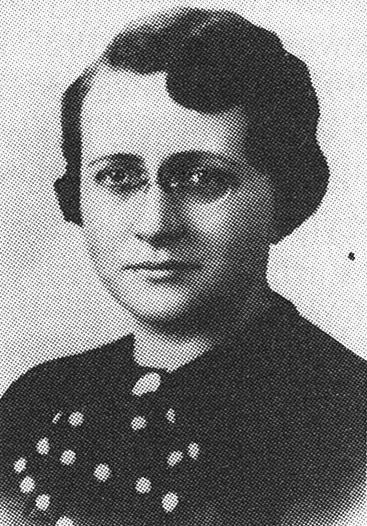
Analysing her life it should be noted that Hanna Petrynowska became pediatrician in 1924 and in 1940 started her work as an in-house doctor in PWPW just right after the imprisonment of her husband who had held that function earlier on. Her husband, Marian Petrynowski was sent to Mauthausen concentration camp and never came back. She started to use codename "Rana" (Eng. wound) after Marian's death in KL Mauthausen.
She was decorated with V class Virtuti Militari Cross posthumously.
She was a sister of Jan Żabiński, who saved 300 Jews as the Director of Warsaw Zoo during German occupation of the capital of Poland. The story was filmed in 2017 in "Zookeeper's Wife' starring Jessica Chastain as Antonina Żabińska, Jan's wife.
Hanna's and Jan's biographies serve as a good example of the Polish response to the evil imposed by German occupants.
They were engaged, not idle in watching all those crimes commited by the German invaders. As for Hanna, she paid with her life for resisting the forces who aimed at the anihilation of Poland and its people during WWII.
Hanna Petrynowska
Image source: Internet
Analysing her life it should be noted that Hanna Petrynowska became pediatrician in 1924 and in 1940 started her work as an in-house doctor in PWPW just right after the imprisonment of her husband who had held that function earlier on. Her husband, Marian Petrynowski was sent to Mauthausen concentration camp and never came back. She started to use codename "Rana" (Eng. wound) after Marian's death in KL Mauthausen.
She was decorated with V class Virtuti Militari Cross posthumously.
Source: Youtube
Read more:
- https://www.pwpw.pl/en/Redoubt/Redoubt.html accessed on 9 April 2018
- https://sprawiedliwi.org.pl/en/stories-of-rescue/story-rescue-zabinski-family accessed on 9 April 2018
- http://lekarzepowstania.pl/osoba/hanna-zabinska-petrynowska/ accessed on 9 April 2018
Tuesday, 20 March 2018
Mass murder in Stary Ciepielów and Rekówka
On 6 December 1942 Germans murdered 31 Poles who were hiding Jews in their households in the villages of Stary Ciepielów and Rekówka. The action was one of the elements of a wider repressive operation aiming at discouraging Poles to provide any help to Jews.
Although it was punishable with death, many Poles continued to risk their lives in helping their Jewish friends and neighbours or any unknown Jews, no matter what 'measures' were taken by the German occupant to make it impossible. Further reading as for the Righteous among the Nations is recommended.
In Stary Ciepielów and Rekówka mainly Kowalski, Kosior, Obuchiewicz and Skoczylas families were affected with Kowalski family loosing all family members but one. The son - Jan was the only survivor.
A 20 man German unit appeared in Stary Ciepielów early in the morning of 6 December 1942. Houses of Kowalski, Obuchiewicz and Kosior families were encircled. Inside women and kids aged 7 months to 18 years old as well as men adults were captured. Two Jewish men were found together with books in Hebrew and Yiddish which testified that they must have been residing in the place.
As for the murder, the Kosior family together with the captured Jews was executed and burnt in a nearby barn. The other detainees were also gathered in one of the houses, shot and burnt as Germans set fire to the building in which they were kept. There are reports that some of the kids survived and attempted to escape but got caught a few hundred meters from the scene and were executed anyway. Some stories say that the youngest kids were not killed and the mercy of the German opressors let them die in the flames.
A film based on the events in Stary Ciepielów and Rekówka was produced in 2009 and is entitled "Rodzina Kowalskich" (Eng. The Story of the Kowalski family). Below a link to the film which may be watched on Youtube.
Read more:
A film based on the events in Stary Ciepielów and Rekówka was produced in 2009 and is entitled "Rodzina Kowalskich" (Eng. The Story of the Kowalski family). Below a link to the film which may be watched on Youtube.
Truly recommended!
Source: Youtube.com
Read more:
- Władysław Bartoszewski, Zofia Lewinówna: Ten jest z ojczyzny mojej. Polacy z pomocą Żydom 1939–1945. Warszawa: Świat Książki, 2007. ISBN 978-83-247-0715-7.
- Szymon Datner: Las sprawiedliwych. Karta z dziejów ratownictwa Żydów w okupowanej Polsce. Warszawa: Książka i Wiedza, 1968.
Monday, 12 March 2018
Kościan and the Euthanasia (action T4)
 |
| Hospital in Kościan |
"Kościan (47 km from Poznań) was one of the first places where Nazi euthanasia action took place, even before such measures had commenced in Germany and Austria. The reasoning behind the "cleaning" of the Polish mental homes surely was almost certainly to obtain space for German troops at the beginning of the war.
In early 1940 the hospital in Kościan was taken over by the SS Sonderkommando Lange and the Gau-Selbstverwaltung (German Council Association) from Poznan. The Polish medical personnel were dismissed, leaving behind 612 Polish patients. Now the hospital was administered by Dr Johann Keste (psychiatrist), Dr. Fritz Lemberger (gynaecologist), Hans Meding (medical inspector) and Wilhelm Haydn (chief of the male nurses), killers in white doctor’s gowns.
In early January 1940, an SS Sonderkommando arrived, carrying a dark brown bottle containing a morphine-scopolamine mixture used to calm the victims.
Probably on 15 January 1940, the first group of naked patients received an injection and were bundled into a mobile gas chamber (gas van or gas trailer) inscribed with an advertisement for "Kaiser's Kaffee Geschäft". Of course, Kaiser's Coffee Company was not involved in the action. The van's (or trailer's) inner sides were lined with metal sheets, the floor was covered with a wooden grate and a lamp on the ceiling illuminated the gas chamber for inspection through a peephole in the back door.
When the driver (an SS man) started the vehicle's engine, the exhaust fumes were emitted into the loading space. The victims screamed loudly before they died. Then the gas van drove from Koscian to Jarogniewice Forest (a site on the road Koscian - Poznan, about 15-20 km north of Koscian). After 15-20 minutes the van finally reached the forest, and nobody in the gas chamber was left alive.
At Jarogniewice Forest prisoners (from KZ Fort VII in Poznan) opened the back doors of the gas van and buried the corpses in mass graves. One week later (on 22 January 1940) a second group of patients were killed in an identical fashion.
Within that week, all in all, 534 patients had been killed - 237 men and 297 women. However, this was only the beginning of a more extensive action in Koscian. On 9 February a transport from Germany with 2,750 Jewish and non-Jewish (German) patients from mental and old people's homes arrived in Koscian. All were killed in the same manner as the first patients. It is most likely that on 24 February 1940 the last transport left Koscian Hospital for Jarogniewice Forest. In total, 3,334 patients lost their lives in course of this euthanasia action in Koscian." (1)
Sunday, 25 February 2018
Markowa massacre
On 24 March 1944 Germans executed Wiktoria and Józef Ulma together with their 6 children as well as 8 Jews who were being hidden at their home.
The Ulmas are recognized as Rightous Among the Nations by Yad Vashem Institute and their life sacrifice serves as the leading story at the Ulma Family Museum of Poles Saving Jews During World War II.

"At the onset of World War II, Józef Ulma (born in 1900) was a prominent citizen in the village of Markowa: a librarian, a photographer, active in social life and the local Catholic Youth Association. He was an educated fruit grower and a bee-keeper. His wife Wiktoria (born Wiktoria Niemczak in 1912), was a homemaker. The Ulmas had six children: Stanisława, age 8, Barbara, age 7, Władysław, age 6, Franciszek, age 4, Antoni, age 3 and Maria, age 2. Another child was due to be born just days after the family's summary execution on 24 March 1944.
In the summer and autumn of 1942, the German Nazi police deported several Jewish families of Markowa to their deaths as part of the German Final solution to the Jewish question. Only those who were hidden in Polish peasants' homes survived. Eight Jews found shelter with the Ulmas: six members of the Szall (Szali) family from Łańcut including father, mother and four sons, as well as the two daughters of Chaim Goldman, Golda and Layka. Józef Ulma put all eight Jews in the attic. They learned to help him with supplementary jobs while in hiding, to ease the incurred expenses.
In the early morning hours of 24 March 1944 a patrol of German police from Łańcut under Lieutenant Eilert Dieken came to the Ulmas' house which was on the outskirts of the village. They were informed ahead of time about the Jews in hiding by Włodzimierz Leś – a member of the Polish Blue Police – who was Ukrainian himself and who knew the Szall family from Łańcut and who took over their property there. The Germans surrounded the house and caught all eight Jews belonging to the Szall and Goldman families. They shot them in the back of the head according to eyewitness Edward Nawojski and others, who were ordered to look at the executions. Then the German gendarmes killed the pregnant Wiktoria and her husband, so that the villagers would see what punishment awaited them for hiding Jews. The six children began to scream at the sight of their parents' bodies. After consulting with his superior, 23-year-old Jan Kokott, a Czech Volksdeutscher from Sudetenland serving with the German police, shot three or four of the Polish children while other Polish children were murdered by the remaining gendarmes. Within several minutes 17 people were killed.
The names of the other German executioners are also known due to their frequent presence in the village (Eilert Dieken, Michael Dziewulski and Erich Wilde). The village Vogt (Polish: Wójt) Teofil Kielar was ordered to bury the victims with the help of other witnesses. He asked the German commander whom he had known from prior inspections and food acquisitions, why the children were also killed. Dieken answered in German, "So that you would not have any problems with them." On 11 January 1945, in defiance of the German prohibition, relatives of the Ulmas exhumed the bodies to bury them in the cemetery, and found out that Wiktoria's seventh child was almost born in the grave pit of her parents."(1)


Image source: Internet
Read more at:
Subscribe to:
Posts (Atom)